

Doors & Windows Where the Details Live
A front door repaint is the highest-leverage two hours of painting on a house — and window trim is what makes an exterior look maintained instead of merely painted. These are also the hardest-working finishes you own: doors get grabbed, slammed, and weather-stripped shut against their own paint, while window sashes and sills catch every drop of water that runs down the glass. Painting them is equal parts color decision and wear engineering.
Michigan doubles the degree of difficulty. Steel doors rust at dings and bottom edges where winter salt splash lands; wood doors and sashes swell in humid Augusts and shrink in dry Januarys, cracking brittle finishes at the panel lines; fiberglass fades in the sun. The finishes that survive here are flexible, properly bonded to slick factory coatings, and applied with the patience to let each coat level and cure.
Why Doors and Windows Are Detail Work
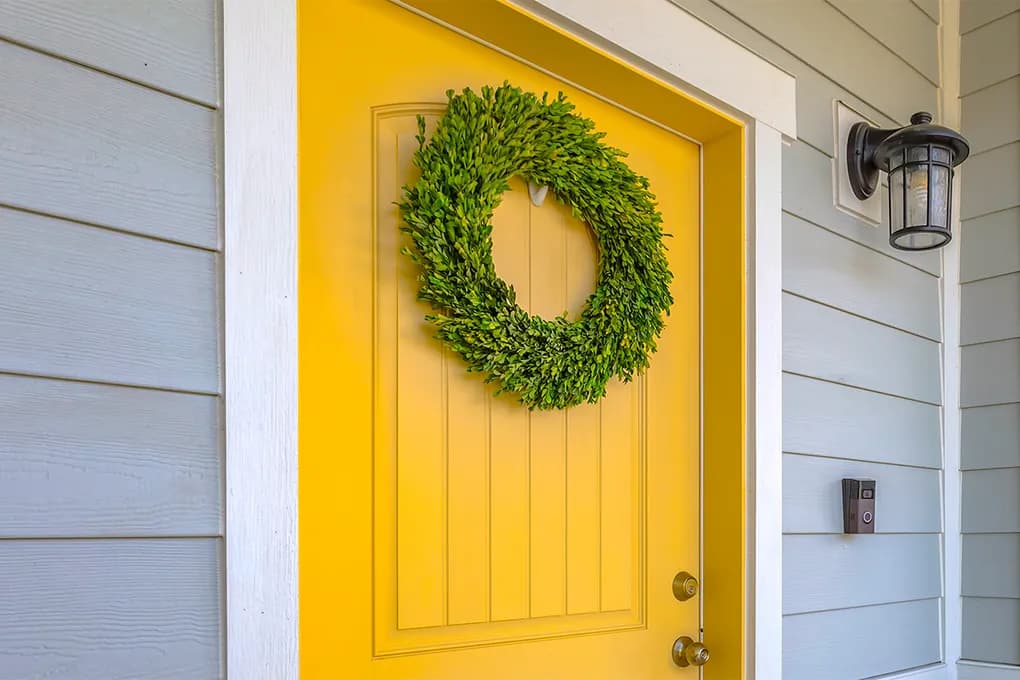
How We Do It Right
- 1Hardware off, not taped overHandles, knockers, kick plates, and weatherstripping come off or get fully protected before prep starts. Paint ridges around taped hardware are the signature of a rushed job, and they're where the finish starts failing first.
- 2Degrease and de-glossDoors carry more skin oil and grime than any other exterior surface, and factory finishes are glossy by design. We clean thoroughly, then scuff-sand so the primer bonds to the surface instead of sliding on it.
- 3Repair and rust treatmentDents and dings get filled and sanded flush; rust on steel gets cut back and the bare metal primed before it can spread under the new finish. On wood windows, soft sills and brickmould go to our carpenters — painting over rot is not a repair.
- 4Bonding primerSlick fiberglass, factory-coated steel, and any previously troubled surface gets Stix Bonding Primer — the difference between a finish that survives ten thousand grabs of the handle and one that doesn't. Bare wood repairs are primed with Fresh Start.
- 5Finish coats with open timeWe use coatings with enough working time to level out glass-smooth — Aura for statement doors, Regal Select for sashes, frames, and brickmould. Two coats, applied so brush and roller texture flows out rather than drying into the film.
- 6Cure careA door that feels dry isn't cured. We time the work and leave the door ajar as long as conditions allow, so fresh paint doesn't bond to the weatherstripping — the classic cause of a sticking door and a torn finish.
What We Put On It
Every product below links to its full page — real technical specs from the manufacturer, not marketing copy.
What Drives the Cost
The Cost & Color Gallery is the fastest way to steal a great front door color — browse real Metro Detroit doors and window packages we've painted, with project costs.
Browse Real Projects & CostsFrequent Questions
Yes, with the right approach per window type. Vinyl windows take a vinyl-safe formula with some color limitations; wood and aluminum-clad windows paint readily. Casements are the easiest case, while double-hung windows can pick up minor scratches over time where the sashes slide against each other — we'll tell you what to expect for yours at the estimate.
Plan on the door being open or lightly used for the working day — the coatings we use dry to the touch quickly, but the door should stay cracked until the finish has set enough not to stick to the weatherstripping. We schedule door work for weather that lets it cure properly and walk you through the first days of care.
Don't pick it from a fan deck in the kitchen. Door color interacts with your siding, brick, roof, and even the storm door — glass and screen shift the perceived shade more than most people expect. Every project includes a free color consultation with Lori, our Certified Color Consultant, and the front door is one of her favorite problems to solve.
Because fiberglass and factory finishes are too slick for ordinary paint to grip — the coating sits on the surface until a fingernail, key, or dog finds an edge. The fix is proper de-glossing plus a urethane-acrylic bonding primer before color. Prepped that way, the finish holds through years of daily use.
A door is the most tempting DIY on the house and one of the most commonly botched: visible brush marks, paint-stuck weatherstripping, and chipping around the handle are the usual results. If you do it yourself, the prep and cure discipline matter more than the paint. If you'd rather it come out looking factory-finished, that's exactly the kind of detail work our crews do daily.
Ready for a Straight Answer on Your Doors & Windows?
Free estimate, written surface-by-surface plan, and a free color consultation with every project — no pressure, ever.